
What is a TV Listening Device?
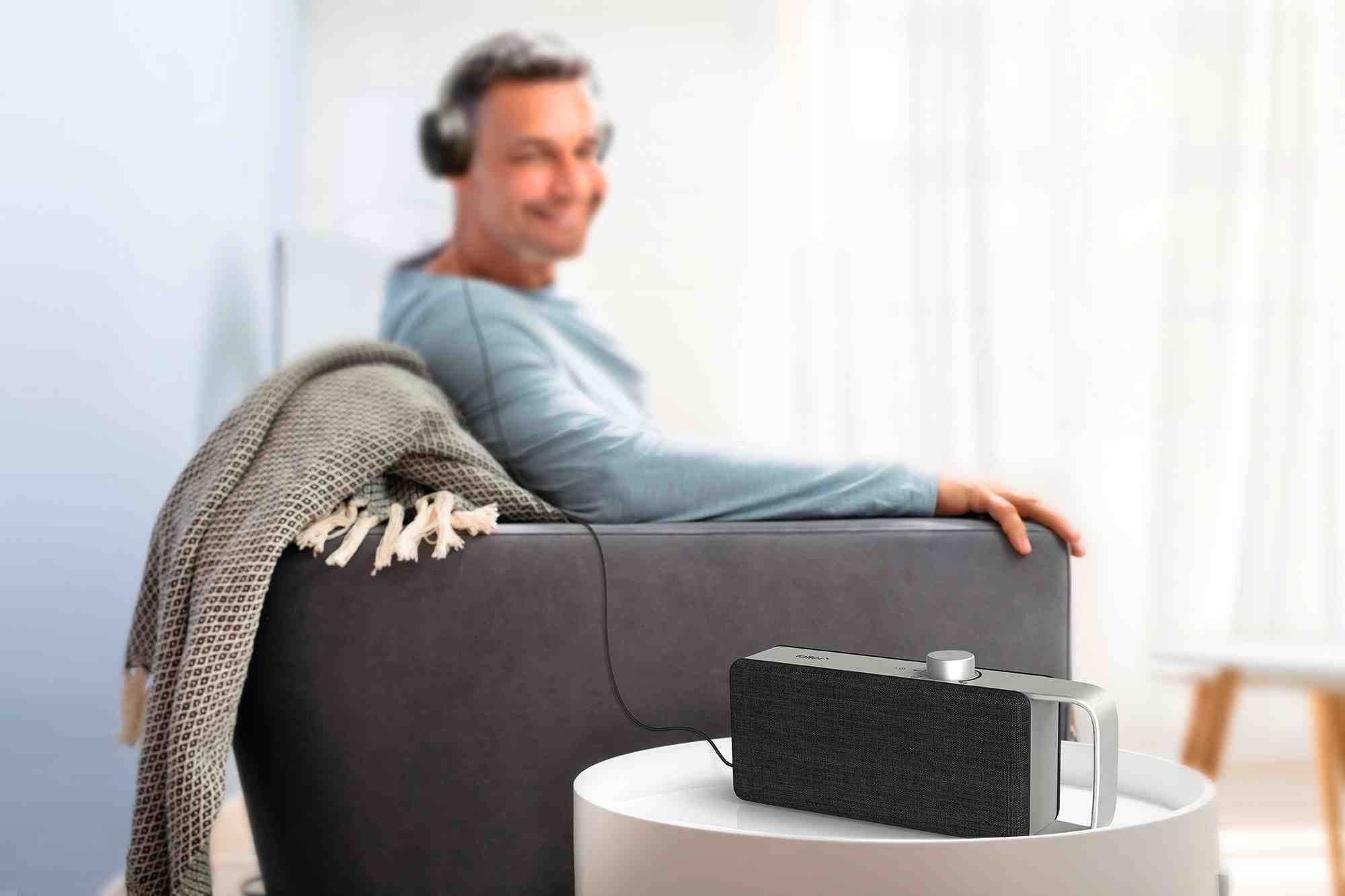
A TV listening device is a gadget that brings the television sound individually closer to your listening position. It picks up the sound from the TV and reproduces it closer to your ear (i.e., at your seat), making speech easier and better to understand without having to turn up the TV volume for everyone in the room.
This makes a TV listening device particularly interesting when dialogues are difficult to understand or when multiple people with different hearing sensitivities watch TV together. The type of device, how they differ, and who they suit depends on personal needs and preferences.
The TV listening device at a glance
A TV listening device is a small gadget that picks up, amplifies, and brings the TV sound closer to your listening position. Instead of turning up the TV, the sound goes directly to your seat or ear, where it can be understood more clearly. Some devices also slightly emphasize speech to make dialogues clearer.
The term TV listening device is broadly used and refers to both headphone variants and small speakers that you place next to you. What they all have in common is that they make TV sound individually louder and clearer.
A TV listening device works by optimizing the transmission path, not the broadcast itself. It brings the sound louder and closer, but does not re-mix an inherently dense TV sound. With simple devices without a speech function, everything becomes uniformly louder—voice and background together. With models that include additional speech optimization, the voice stands out even more.
How a TV Listening Device Works
The basic principle is the same for most devices. The sound is picked up from the TV and brought to the ear via a shorter path, so less is lost along the way.
From TV to Device
The connection usually runs through a small base station, which is connected to the TV with an audio cable, often via the optical audio output or the headphone jack. An optical cable transmits digital sound, while the headphone output transmits analog. Both methods are suitable for a listening device. From there, the station wirelessly transmits the sound to the listener or speaker.
Louder and Closer to the Listening Position
The actual effect comes from proximity and subjective loudness. Because the sound arrives directly at your seat or ear, it no longer has to travel across the entire room. The volume can be adjusted independently of the TV, so everyone can choose their own level. Especially when watching TV together, this separate volume control is the real advantage, as the TV itself can remain quieter.
Emphasizing Speech
Some devices also work on speech intelligibility and emphasize voices over music and background noise. The strength of this effect varies from device to device. With basic models, the sound primarily becomes louder, while more sophisticated models are more clearly tuned for speech. For clarity, this difference is often more important than pure volume.
What Types of TV Listening Devices Are There?
The term TV listening device encompasses several types that differ significantly in wearing comfort and use.
| Type | Wear or Place | Well Suited For | Special Feature |
|---|---|---|---|
| Wireless Headphones | Over or On the Ear | watching TV alone and focused | largely blocks out surroundings |
| Under-Chin Headphones | Lightweight band under the chin | long TV sessions, quick to put on and take off | doesn’t press on the ears |
| Speaker for Your Seat | Stands next to the armchair | shared TV viewing, conversations on the side | others can listen along, the room remains open |
Which type fits best primarily depends on whether you watch TV alone or with others, and how long the device needs to be worn continuously.
Headphone and under-chin variants provide a very personal sound experience but also shield you from your surroundings. A speaker at your seat allows for shared TV viewing and conversations in the room to continue without anyone having to wear anything. If you’re unsure, first consider whether you want to be aware of your surroundings while watching TV and if you can generally wear headphones comfortably for extended periods.
Who a TV Listening Device is Suitable For
A TV listening device is worthwhile wherever normal TV sound reaches its limits, often due to personal characteristics or limitations.
If Dialogues Are Difficult to Understand
If voices get lost in the TV sound and you often ask for clarification or rewind, a listening device brings the sound closer and louder to your ear. This helps you follow dialogues again without constantly adjusting the volume. This applies not only to older viewers but also to modern sound mixes where music and effects are close to speech.
If the Sound Needs to Stay Quiet
Late at night or in an apartment with thin walls, the TV often shouldn’t disturb anyone. A listening device allows you to set the sound to your personal loud enough level while keeping the room quiet. Anyone who doesn’t want to wake sleeping children or neighbors also benefits from hearing the sound only at their own spot.
When Watching TV Together
If two people have different hearing abilities, arguments about volume can quickly arise. A listening device decouples personal volume from the TV, so both can have their preferred level. This way, no one has to give up their accustomed volume just because their hearing perception differs.
What to Consider When Choosing
Which device fits depends on your TV, listening position, and personal habits. A few points are worth clarifying beforehand.
Connection and Connectivity
It’s important that the device matches the TV’s audio outputs, such as the optical output or headphone jack. The wireless range should also match the distance between the TV and your seat to ensure stable sound. For very new TVs without a classic headphone jack, the optical output is often the most reliable option. Depending on the device, other connection types may be relevant. The crucial factor is which audio outputs your TV actually offers.
Operation and Battery
Simple operation with few buttons or a rotary knob makes everyday use easier. For wireless devices, battery life also plays an important role so that a long TV evening isn’t interrupted by recharging.
Sound and Speech Clarity
Not every device sounds the same. Some primarily make the sound louder, while others specifically emphasize speech. If you use the amplifier mainly because of unclear dialogues, it’s better to pay attention to audible speech clarity rather than just maximum volume, because pure loudness also boosts the background noise.
Listening Alone or Together
Those who mostly watch TV alone may be well satisfied with headphones or under-chin headphones if they find them comfortable. If TV is often watched by two people or in company, a speaker at the seat is a better fit because it doesn’t exclude the surroundings.
OSKAR as a TV Listening Device
An example of the speaker variant is the TV speaker OSKAR. This portable device sits next to your seat and brings the TV sound louder and closer, while the room remains open and others can still listen along. Thus, OSKAR is a speaker-type among TV listening devices, just as wireless headphones and under-chin headphones are their own types.
Frequently Asked Questions
A TV listening device is a gadget that picks up, amplifies, and brings the TV sound closer to your listening position. This makes speech easier to follow without turning up the TV for everyone. The listening device is available as wireless or under-chin headphones and as a small speaker for your seat.
A base station is connected to the TV via an audio cable, usually to the optical output or headphone jack. From there, the sound is wirelessly transmitted to the listener or speaker at your seat. The volume can be adjusted independently of the TV, and some devices also emphasize speech.
Primarily for anyone who finds dialogues on TV difficult to understand, wants to keep the sound quiet in the evening, or watches TV with another person who has different hearing sensitivities. The sound comes closer to the ear and can be personally adjusted without the TV needing to be louder for the entire room.
Common types include wireless headphones and under-chin headphones, which bring the sound very personally to the ear, as well as small speakers that you place next to your seat. Headphones shield you from your surroundings, while a speaker allows for shared TV viewing and conversations to continue.
Important considerations include the appropriate connection to the TV, sufficient wireless range, simple operation, and for wireless devices, battery life.